











Healesville Sanctuary

Tasmanian Devil

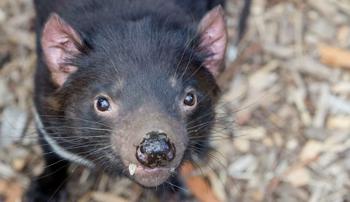
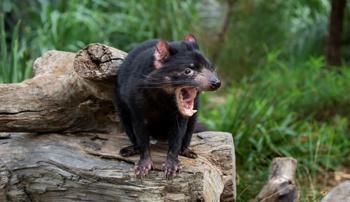
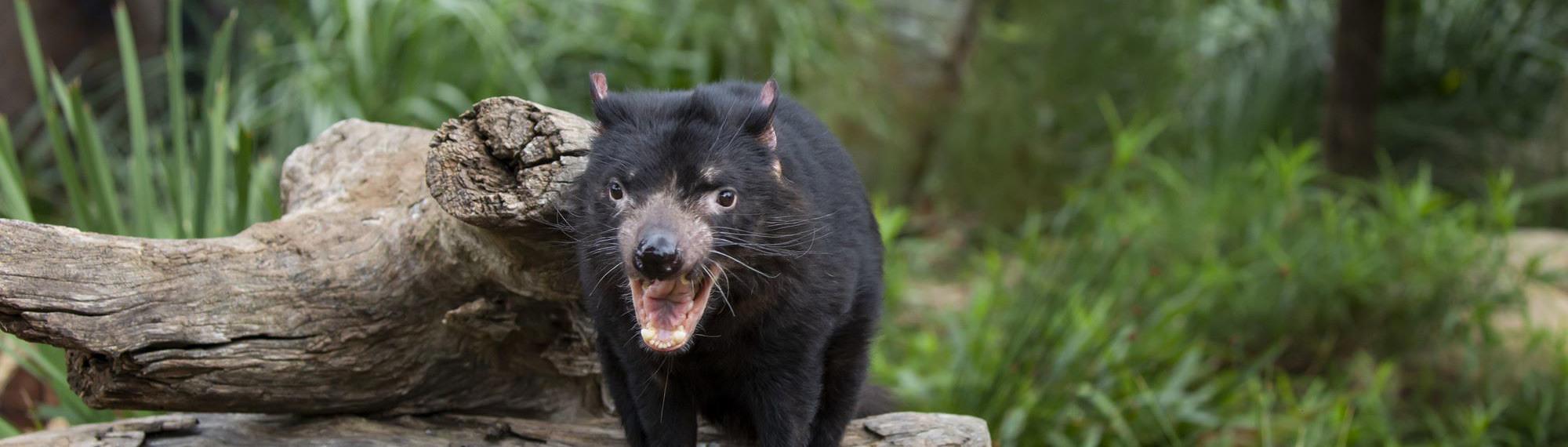
Tasmanian Devils, Sarcophilus harrisii, are the largest carnivorous marsupials in the world today.  Devils once occurred on mainland Australia, but have been confined to Tasmania since pre-European times. 

The survival of Tasmanian Devils is threatened by Devil Facial Tumour Disease (DFTD), and the species is now listed as Endangered.  DFTD causes tumours around the mouth, face and neck of Devils.  The disease develops rapidly and is fatal: affected animals die within six months of the lesions first appearing. 

Healesville Sanctuary aims to breed and manage a sustainable captive population of about 120 Devils for at least 10 years as part of the 'Save the Tasmanian Devil’ program.

DFTD is contagious - the cancer cells are spread by biting during feeding and mating.  It has spread across approximately 60% of Tasmania (Feb 2010) and has caused a rapid decline in wild Devil populations.

The ‘Save the Tasmanian Devil’ program was established to investigate the disease through population monitoring, disease diagnostics and wild population management.

As part of this program, Healesville Sanctuary is one of eighteen zoos taking Tasmanian Devils.  If the catastrophic decline of this species continues, these captive populations could become an essential source of animals for reintroduction to the wild.

During this time, authorities are working to eradicate the DFTD from Tasmania.  The overall insurance program aims to hold up to 1500 breeding animals (or ~5000 individuals in total over 50 years).

Zoos Victoria’s key roles in the recovery of the Tasmanian Devil are to:

  • Breed and manage a captive insurance population
  • Assist with population monitoring programs
  • Research captive breeding techniques and DFTD
  • Increase community awareness and support for the Tasmanian Devil. 

Wombats and Nocturnal House animals will be off display from 15 July until 28 June while we transform the Devils Playground, Wombat Gully and Animals of the Night into exciting new exhibits featuring our threatened species breeding programs and our work fighting wildlife extinction. 

Plans and publications

PDF icon Download a comprehensive overview of what Zoos Victoria is doing to save the Tasmanian Devil (427 KB)

PDF icon Save the Tasmanian Devil Program: (2012) Annual Program Report 2010/2011 Department of Primary Industries, Parks, Water & Environment (1.5 MB).

DSEWPC (2010). Sarcophilus harrisii in Species Profile and Threats Database, Department of Sustainability, Environment, Water, Population and Communities, Canberra.

Tasmania DPIWE (2005) Tasmanian Devil Facial Tumour Disease (DFTD) Disease Management Strategy.  Department of Primary Industries, Water and Environment.

Meet the animals

Tasmanian Devil

Brute Force for the Extinction Fighters

Found: deep in a burrow in Tasmania

Despite his ferocious teeth and gruff bark, he is actually a big softie deep-down. His screech can be heard for kilometres.

Meet all 20 priority native threatened species

Zoos Victoria plans to save this endangered animal.

See all of our 20 priority threatened native species.

News
Love Your Locals tram launch image 1

Victoria's most endangered take to the streets

A City Circle tram has been dressed up to feature Zoos Victoria’s 20 priority native threatened species.

24 October 2012
Rex, first time David dad, celebrates father's day

Healesville Sanctuary boosts numbers on Threatened Species Day

To coincide with Threatened Species Day, Healesville Sanctuary is celebrating births of 18 Tasmanian Devil joeys, 24 Helmeted Honeyeaters, 23 Orange-bellied Parrots, 1129 Spotted Tree Frogs, 20 Southern Corroboree Frogs, 120 Northern Corroboree Frogs and 16 Mountain Pygmy-possums.

10 September 2012
Encounters
Mountain Pygmy-possum in hands

Fighting Extinction Tour

Venture behind the scenes at Healesville Sanctuary, meet some of our most precious endangered animals and become an Extinction Fighter.

Did you know?
  • Tasmanian Devils are the largest living carnivorous marsupials in the world.