






Eastern Barred Bandicoot

Despite this little marsupial's extremely short gestation period, populations plummeted following European settlement

A captive-bred bandicoot is released into grassland habitat at Mt Rothwell.


These joeys are being hand reared and will be cared for in the education centre to raise awareness of this species.
The mainland subspecies of Eastern Barred Bandicoot, Perameles gunnii, is now considered extinct in the wild. They are listed as endangered federally.
Bandicoots were once widespread across grasslands and grassy woodlands of western Victoria and South Australia. By 1991, however, the subspecies was at the brink of extinction, primarily due to habitat loss (for agriculture and development) and predation by introduced foxes and cats.
A captive breeding program was established using Eastern Barred Bandicoots from the last known population at Hamilton. Since then, a coordinated Recovery Program has focused on captive breeding, habitat management and predator control. There are currently three small reintroduced populations of Eastern Barred Bandicoots.
Zoos Victoria coordinates the captive breeding program and so plays a key role in the recovery of this species through:
- Supplementing reintroduced wild populations through captive breeding for reintroduction
- Maintaining an insurance population in captivity
- Conducting research to improve breeding and reintroduction success
- Increasing community awareness and support for the Eastern Barred Bandicoot
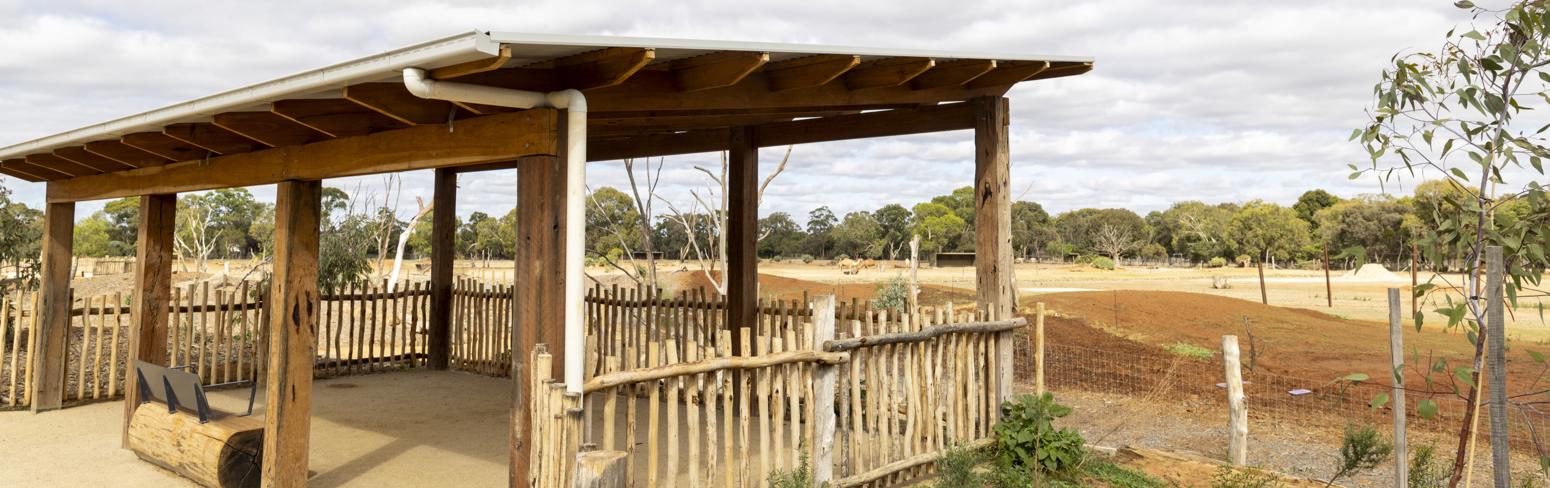
A 3.7 ha soft-release enclosure (i.e. a large protected, predator-proof enclosure containing natural habitat) at Werribee Open Range Zoo enables Zoo visitors to connect with Eastern Barred Bandicoots and their basalt plains environment.
Plans and publications
- Zoos Victoria's captive breeding program has saved this mainland bandicoot from extinction