


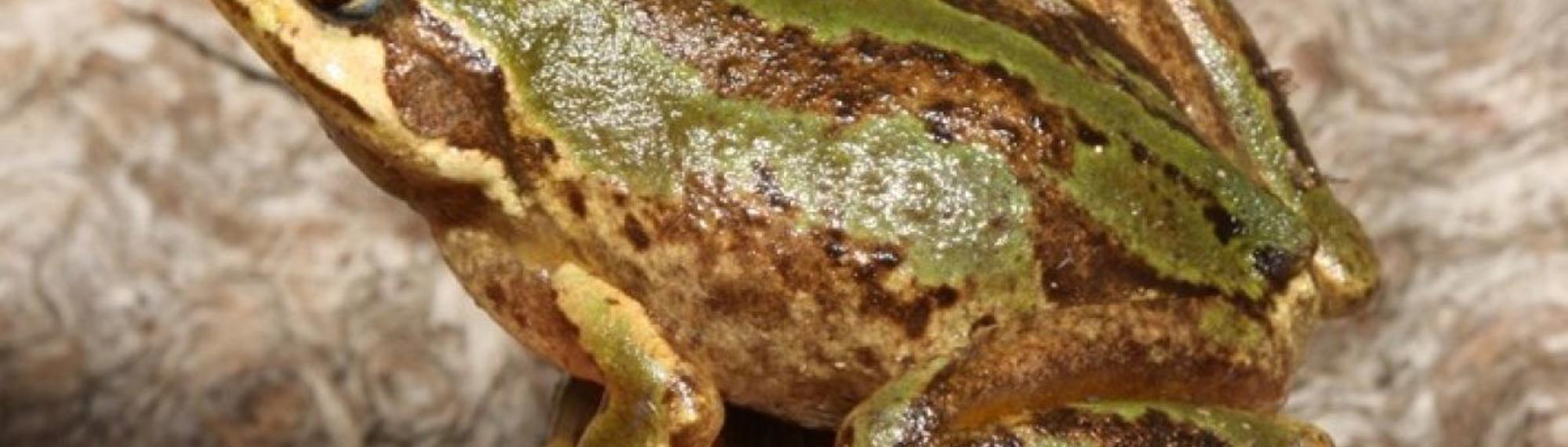
Alpine Tree Frog
This distinctive high-elevation frog is Critically Endangered in Victoria.
Alpine Tree Frogs once occurred across the mountainous southern alps of mainland Australia, from Mount Baw Baw to Kosciuszko National Park in New South Wales. The species is now limited to just a handful of wild sites in Victoria.
These high-elevation frogs measure a mere three-and-a-half centimetres and are typically green and brown with small warts across their backs.
Alpine Tree Frogs need healthy wetlands and peatlands for breeding. Males ‘whistle’ to attract a mate from spring to late summer along the water's edge or while floating. Female frogs will attach their eggs to underwater plants, and the tadpoles will live and grow within streams, ponds or bogs until metamorphosis occurs in late summer and early autumn.
Major threats
Alpine Tree Frog populations have declined rapidly since the 1980’s. This loss is mainly attributed to the disease, Chytridiomycosis, which is caused by Amphibian Chytrid Fungus infection. Pressures from climate change, habitat destruction and invasive species are ongoing, compounding threats to this species.
The plan for recovery
With the broad decline of the Alpine Tree Frog across its historic range, Zoos Victoria is supporting field surveys to better understand the distribution and health of wild populations.
How you can help
Visit one of Zoos Victoria’s properties - Melbourne Zoo, Werribee Open Range Zoo, Healesville Sanctuary and Kyabram Fauna Park. Your ticket and Zoo Membership supports our Fighting Extinction work.
Create community awareness and support for the Alpine Tree Frog.
Research ways you can live sustainably and take action for wildlife.
Donate if you can. Help us create a future rich in wildlife.
Image: Nick Clemann
