


Southern Brush-tailed Rock Wallaby
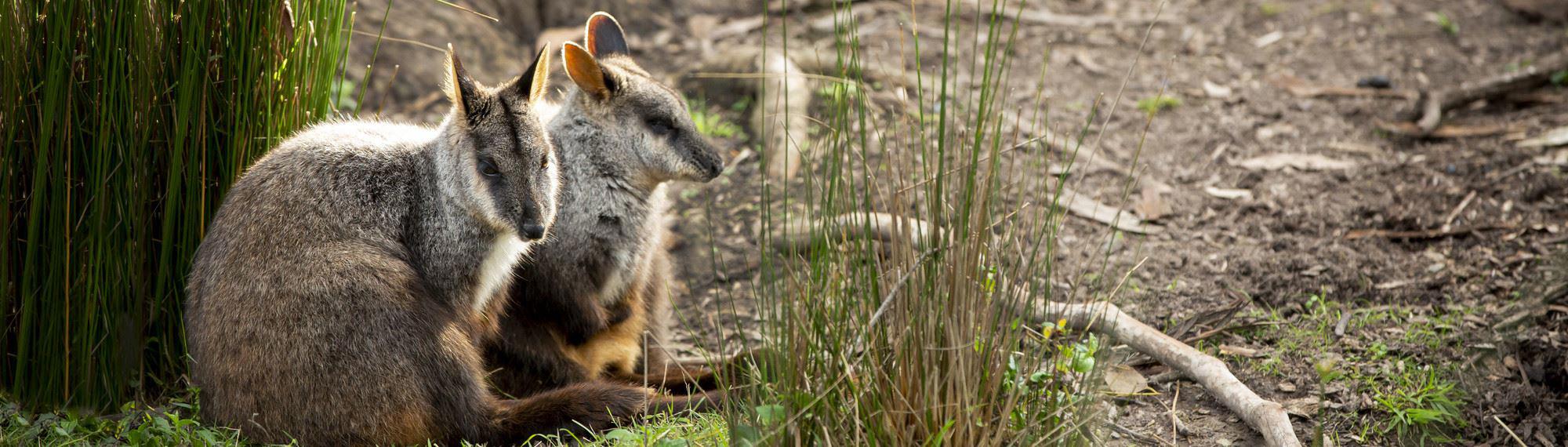
This agile marsupial is found in only two isolated Victorian locations.
Brush-tailed Rock Wallaby lives in rugged areas and can bound great distances across rocky terrain. There are three genetically distinct populations across their traditional range from southern Queensland to Victoria. The Southern Brush-tailed Rock Wallaby is now restricted to just two sites in Victoria – the Snowy River National Park in and Gariwerd Grampians National Park.
They take shelter among ridges, cliffs and rock jumbles, and emerge at dusk to feed on native grasses and other vegetation.
Major threats
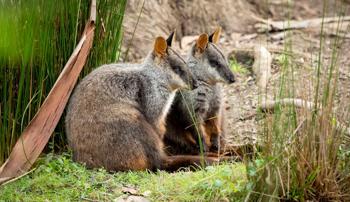
Habitat destruction and the impacts of invasive species, such as cats, foxes and goats, has caused the few remaining Brush-tailed Rock-wallaby populations to become isolated. A lack of genetic diversity is now a significant threat to the survival of the species.
The plan for recovery
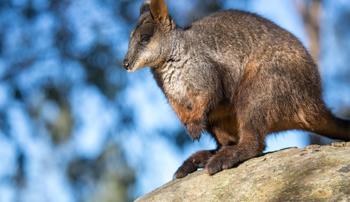
Zoos Victoria is working with partners to support free-ranging captive populations and reintroduce the species into new wild sites.
Our partners
The Victorian Government’s Department of Environment, Energy and Climate Action
The ACT Government’s Environment, Planning and Sustainable Development Directorate
Parks Victoria
Odonata Foundation
Barbaloot Conservation Reserve
The University of Melbourne
Deakin University
Adelaide University
Wildlife Unlimited
How you can help
Visit one of Zoos Victoria’s properties - Melbourne Zoo, Werribee Open Range Zoo, Healesville Sanctuary and Kyabram Fauna Park. Your ticket and Zoo Membership supports our Fighting Extinction work.
Create community awareness and support for the Southern Brush-tailed Rock-wallaby.
Research ways you can live sustainably and take action for wildlife.
Donate if you can. Help us create a future rich in wildlife.
Is your classroom learning about the Brush-tailed Rock-wallaby?
Browse through our collection of animal teaching and learning resources for students. These include animal toolkits, e-books, Ask a Zoo Expert resources, video showcases and real-world examples to support the VCE Study Design.
Fewer than 100 Southern Brush-tailed Rock Wallabies remain in Victoria.
