





















Member Blog: New lifeline for critically endangered Helmeted Honeyeaters
One of Victoria’s Faunal Emblems facing the real threat of extinction is receiving a new safe haven for orphaned or fragile fledglings.
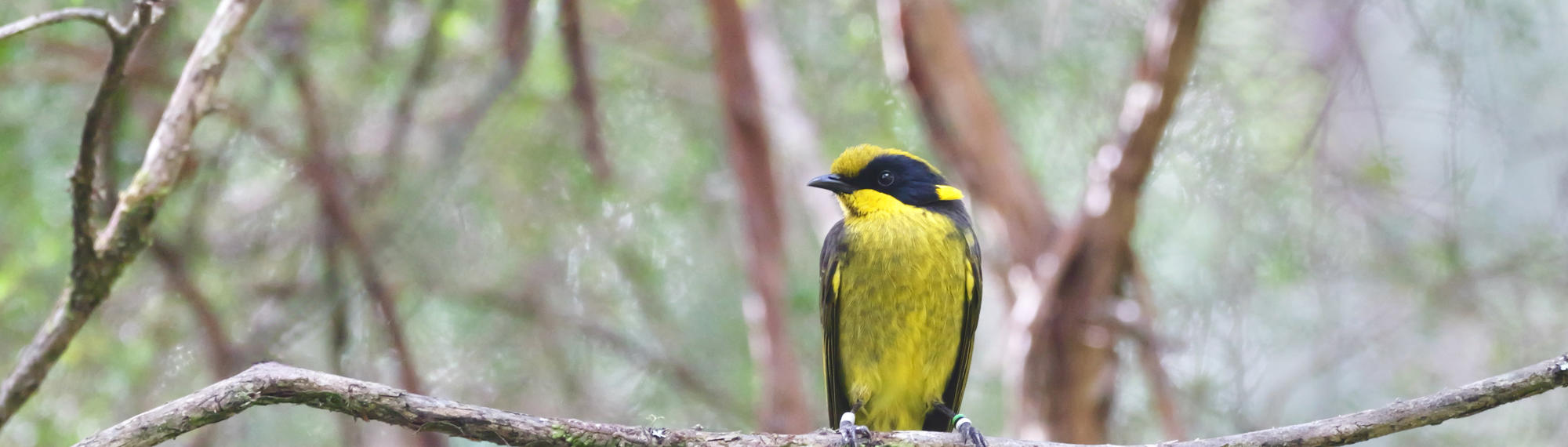
The Critically Endangered Helmeted Honeyeater is a plucky little yellow and black bird with a lack of suitable habitat and lack of genetic diversity, with approximately 250 adults remaining in the wild.
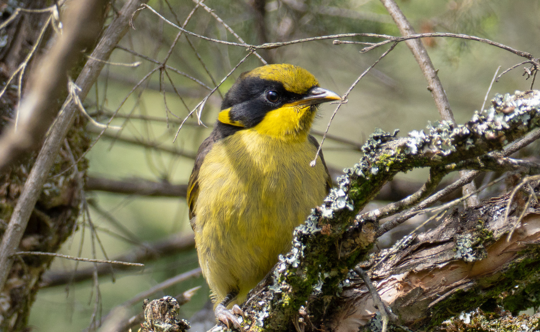
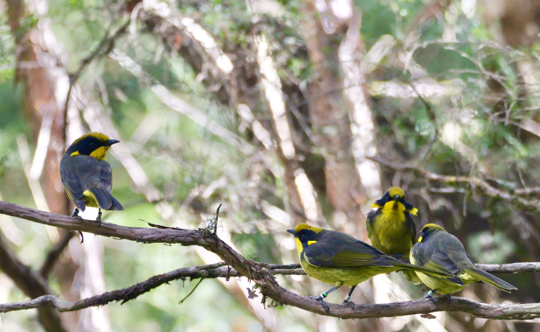
Generous donors have invested more than $150,000 in a new bio secure Helmeted Honeyeater Hand-raising and Incubation Facility at Healesville Sanctuary to help the species thrive.
This new facility behind the scenes increases options to support the breeding of wild and captive birds. During breeding season (August to March), eggs or chicks may need to be fostered due to threats of predation, nest abandonment, the death of a parent, or to increase breeding output, such as encouraging genetically valuable pairs to produce more eggs. Keepers work closely with biologists in the field to ensure that vulnerable eggs and chicks can be fostered at the Sanctuary.
There are dedicated climate-controlled rooms, incubators, an office for monitoring bird behaviour on camera and a kitchen for hygienic food preparations.
Threatened Species Coordinator Nicole said this new build will help the team tremendously and ward against the elements.
“This building supports one of our most long-standing threatened species programs by improving welfare outcomes for Helmeted Honeyeaters,” said Nicole.
“It will improve successful egg hatching and chick raising, resulting in higher survival rates and increased numbers of birds for release to the wild each year. It’s our hope that future generations can see this species thrive.”
In autumn this year, 17 juvenile honeyeaters were released from Healesville Sanctuary into the wild. Eight fluttered off to the newest population in Cardinia (est. 2025) and nine flew off into Yarra Ranges National Park (est. 2021).
Field officers are closely monitoring how the birds are settling into their new wild homes and provide supplementary feeding to assist with the transition. It’s hoped these birds will go on to have their own chicks further increasing population numbers and genetic diversity.
Since the conservation recovery program began in 1989, it’s gone from strength to strength increasing numbers from just 50 birds (15 breeding pairs) at Yellingbo Nature Conservation Area to more than 250 birds and three distinct populations to risk spread against threats such as bushfire and disease. More than half of the pairings of birds at Healesville Sanctuary produce genetic rescue offspring. Important research in collaboration with Monash University has found these offspring have better fitness, live longer and go on to produce more chicks in the wild.
The Helmeted Honeyeater is one of Victoria’s Faunal Emblem along with the Leadbeater’s Possum. Both are classified as Critically Endangered.
Multiple partners and volunteers are working together to save this species from extinction including Cardinia Environment Coalition, Cardinia Shire Council, the Department of Energy, Environment and Climate Action (DEECA), Monash University, Friends of the Helmeted Honeyeater, Bunurong Land Council Aboriginal Corporation, Melbourne Water, City of Casey and Zoos Victoria. Zoos Victoria would like to acknowledge the generous support of the JMS Foundation, Lady Southey AC, Charles Tegner and anonymous supporters who made this project possible.