
























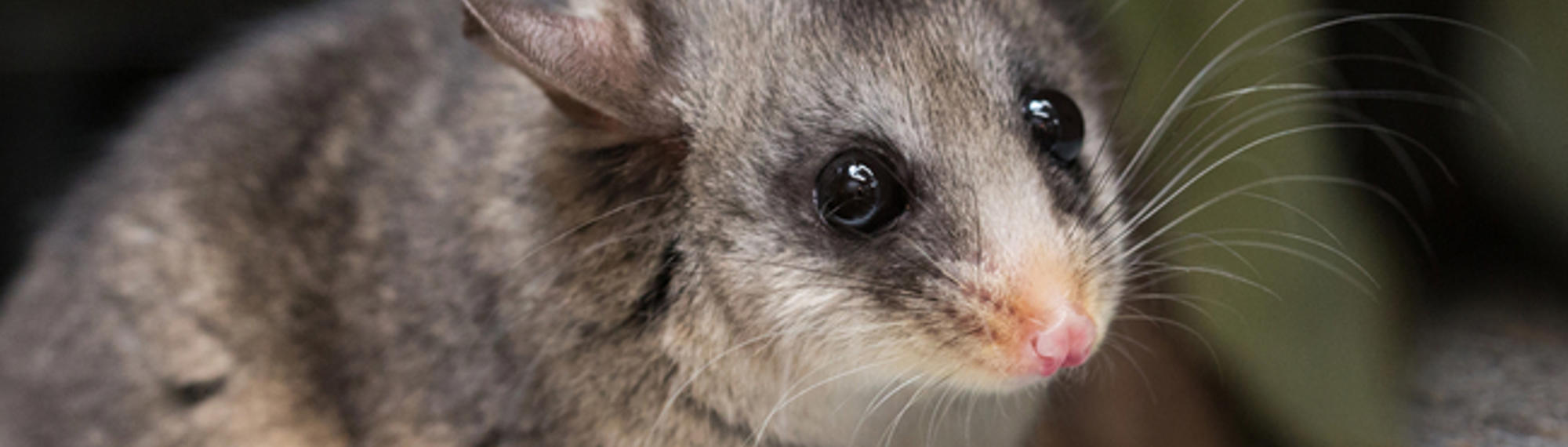
A DOZEN DELIGHTFUL PYGMY-POSSUMS
Not one, not two, but 12 Mountain Pygmy-possums have been born at Healesville Sanctuary as part of a breeding program for the Critically Endangered species.
Three mums have each produced litters of four offspring, the maximum number of
young for the species.
The joeys were born last October and were carried in the pouch for four weeks before they were old enough to be left in
their nest boxes. While they become fully independent at approximately three months old, only now have zookeepers had
their first glimpse of the possums in person during their first vet checks at the Sanctuary’s Australian Wildlife Health
Centre after watching their every move on CCTV.
Healesville Sanctuary’s Threatened Species Coordinator Nicole Boys said the joeys look like tiny versions of the adults.
“The best way to identify them is by their big heads and much littler bodies.”
The team has decided to go with a moth theme in naming some of the joeys, as the species relies on eating Bogong
Moths to feed their young during the spring.
“One of the mums is called Mammoth. So, we went with Behemoth, Mothilda, Woolly Mammoth and we have Mothball,”
Mrs Boys said.
It is understood fewer than 2,000 Mountain Pygmy-possums remain in the wild, so every single one of them is valuable.
“These little joeys will remain here in our breeding program, and hopefully, in the coming years they will go on to breed,
sharing their genes.”
Mountain Pygmy-possums were once thought to be extinct until they were rediscovered at Mt Hotham in the 1960s. They
are Australia’s only true hibernating marsupial spending at least five months of the year sleeping under snow. They are
a good indicator species for how our alpine habitats are faring as our environment changes. The IUCN Red List classifies
this species as Critically Endangered with a decreasing population. Threats to their survival include the reduction of
Bogong Moth populations as they are key spring food source, climate change, loss of habitat and predation from cats and
foxes.
These tiny possums are finely tuned weight loss experts. In the lead up to winter they almost double their weight to
around 80 grams and then over the winter as they hibernate, they shrink back down to half the size.
Healesville Sanctuary visitors can see this species in the Animals of the Night nocturnal house. Four females recently
moved into a larger renovated habitat with a boulder field reflecting their natural habitat. Every visit to the Sanctuary
supports our ongoing conservation work to restore a future rich in wildlife.