





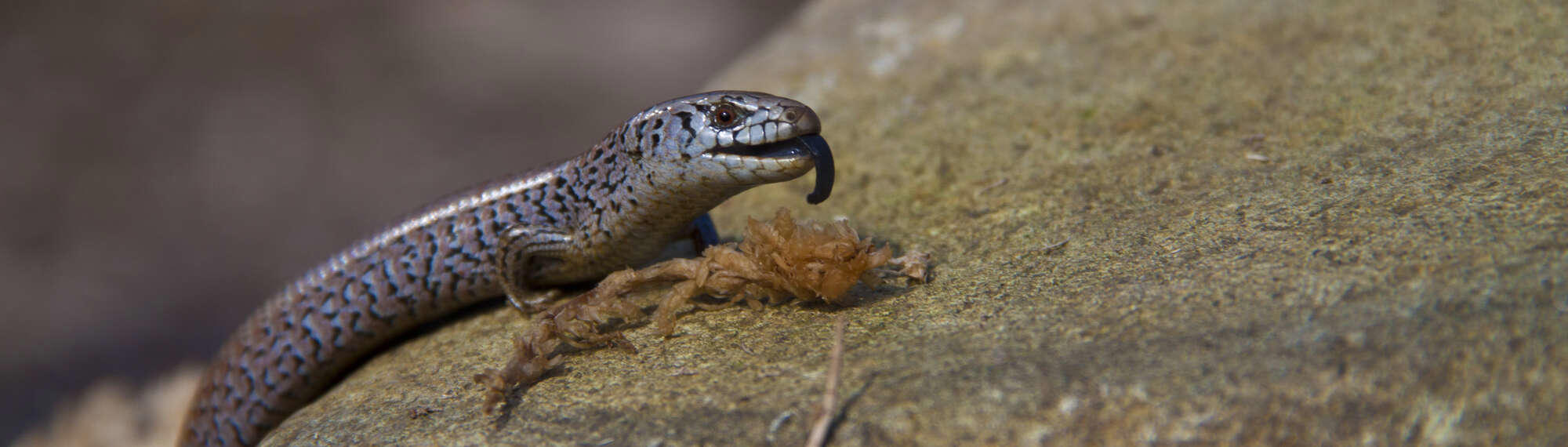
Alpine She-oak Skink
This high-altitude lizard is Endangered.
Alpine She-oak Skinks live 1500m above sea level at the top of isolated mountain habitats. Only a handful of populations are known to remain in Victoria and New South Wales.
They will imitate a snake if threatened, pulling their legs in close to their body and flicking their tongues. They hibernate over winter and are known to live for more than five years in the wild.
Major threats
All remaining Alpine She-Oak Skink populations are at risk from climate change and fire events. Fire kills individuals and destroys understory vegetation, leaving survivors vulnerable to predators. The skinks are also threatened by extensive habitat destruction and degradation by invasive species, such as feral horses and pigs.
The plan for recovery
To better understand the Alpine She-oak Skink’s risk of extinction, Zoos Victoria is working with partners to conduct annual population monitoring and genetic health analysis across the species’ range in Victoria and New South Wales.
How you can help
Visit one of Zoos Victoria’s properties - Melbourne Zoo, Werribee Open Range Zoo, Healesville Sanctuary and Kyabram Fauna Park. Your ticket and Zoo Membership supports our Fighting Extinction work.
Create community awareness and support for the Alpine She-oak Skink.
Research ways you can live sustainably and take action for wildlife.
Donate if you can. Help us create a future rich in wildlife.
Is your classroom learning about the Alpine She-oak Skink?
Browse through our collection of animal teaching and learning resources for students. These include animal toolkits, e-books, Ask a Zoo Expert resources, video showcases and real-world examples to support the VCE Study Design.
Only five Alpine She-oak Skink populations remain in Victoria.
