


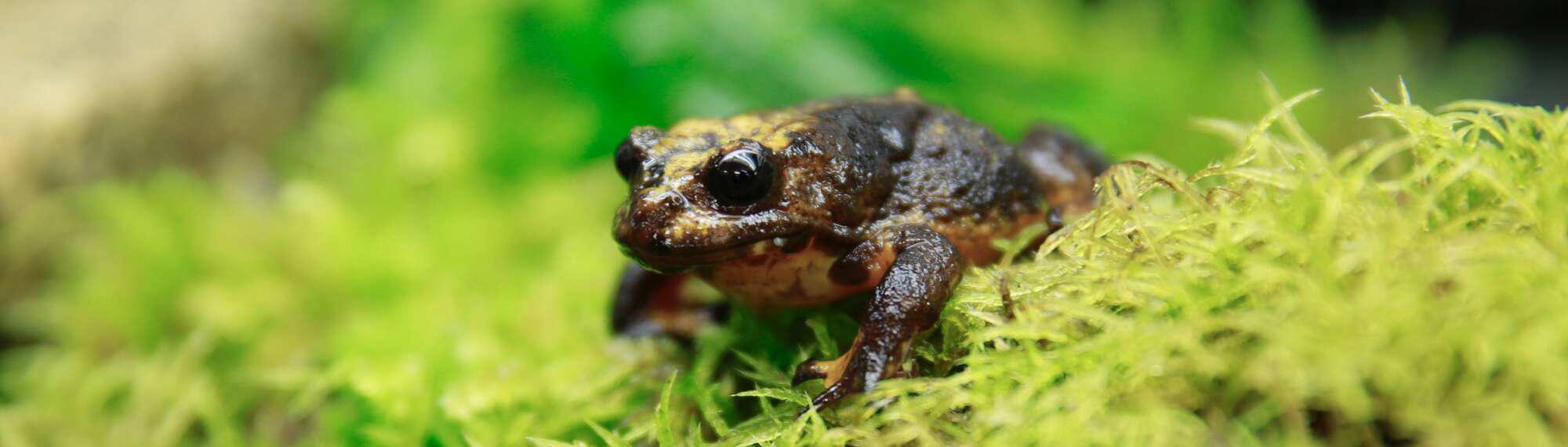
Baw Baw Frog
This endemic amphibian is one of Australia’s most threatened.
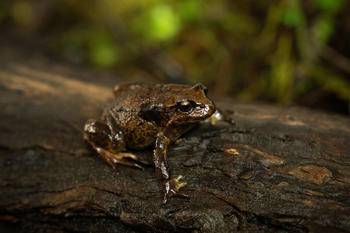
The Baw Baw Frog is a small, brown amphibian found only in the high-altitude forests of Baw Baw Plateau.
When male frogs reach sexual maturity at approximately four-years-old, they establish ‘call sites’, where they will sing to attract females over spring and summer.
Baw Baw Frogs spend most of their time buried under leaf litter and soil. Tadpoles are born with a large yolk sac, which they rely on for nourishment until metamorphosis when they will begin to emerge and feed on insects.
Major threats
The wild Baw Baw Frog population has declined by more than 98 per cent since the late 1980s. This loss is mainly attributed to the disease, Chytridiomycosis, which is caused by Amphibian Chytrid Fungus infection. Pressures from climate change, habitat destruction and pressures from invasive species also contribute to the decline.
The plan for recovery
Zoos Victoria conducts annual population monitoring and releases from the conservation breeding program to support wild Baw Baw Frogs. Research is underway to improve the species’ genetic and reproductive health, and better understand the role of Chytridiomycosis in the decline of frog numbers.
Milestones we’ve met along the way:
2011 - Melbourne Zoo’s Amphibian Specialists joined survey teams to collect egg masses and adult Baw Baw Frogs to establish a conservation insurance population for the species.
2018 - Zoos Victoria’s Amphibian Specialist Keepers became the first in the world to successfully breed the Baw Baw Frog.
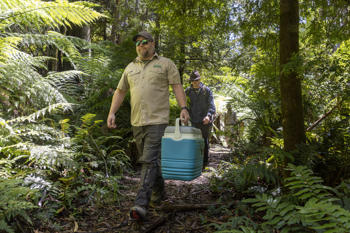
2022 - Zoos Victoria’s Wildlife Detection Dog team began assisting field surveys in the hopes of helping researchers detect both male and female frogs, and extending survey periods beyond when males are calling.
Our Partners
The Victorian Government’s Department of Environment, Energy and Climate Action
Baw Baw Frog Recovery Team
Baw Baw Shire Council
Mt Baw Baw Alpine Resort
University of Wollongong
How you can help
Visit one of Zoos Victoria’s properties - Melbourne Zoo, Werribee Open Range Zoo, Healesville Sanctuary and Kyabram Fauna Park. Your ticket and Zoo Membership supports our Fighting Extinction work.
Create community awareness and support for the Baw Baw Frog.
Research ways you can live sustainably and take action for wildlife.
Donate if you can. Help us create a future rich in wildlife.
Is your classroom learning about the Baw Baw Frog ?
Browse through our collection of animal teaching and learning resources for students. These include animal toolkits, e-books, Ask a Zoo Expert resources, video showcases and real-world examples to support the VCE Study Design.
Fewer than 500 Baw Baw Frogs remain in the wild
